
40 Years since the Chernobyl Nuclear Accident
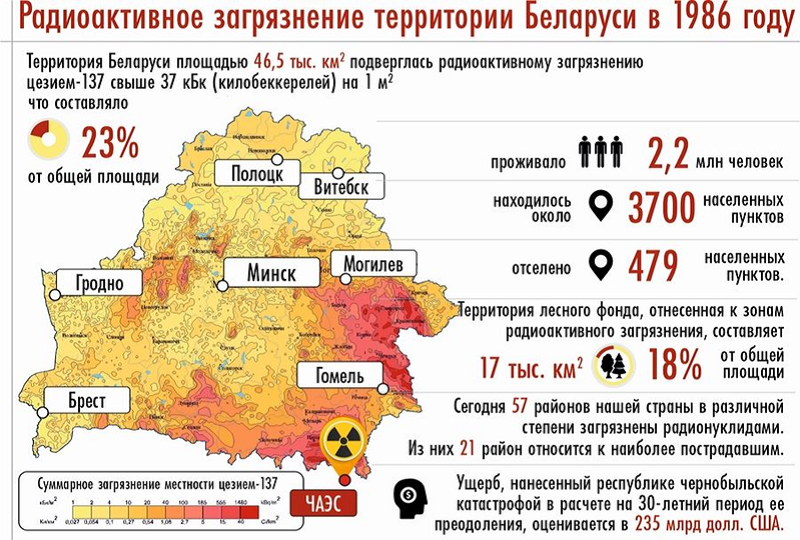
26.04.2026The Chernobyl nuclear power plant accident was a major radiation incident, resulting in large-scale economic and socio-psychological consequences. It impacted the lives of millions of people and required the maximum mobilization of forces and resources to overcome its consequences. The Republic of Belarus received 35% of the Chernobyl fallout of cesium-137, the main radionuclide currently determining the radiation situation. 23% of the territory was contaminated, including more than 1.8 million hectares of agricultural land (approximately 20% of the total area) and more than 2 million hectares of forests (approximately 23%). Short-lived radioactive isotopes of iodine (primarily iodine-131) contaminated virtually the entire territory.
%E2%84%961(1).jpg)
.jpg)
.jpg)
.jpg)
The disaster affected 56 districts of the republic, more than 3,600 settlements with a population of about 2.5 million people, including 1.5 million children. In 1986, 24,700 residents were evacuated from 107 settlements in the Bragin, Narovlya, and Khoyniki districts of the Gomel region. A 30-kilometer exclusion zone was established around the Chernobyl Nuclear Power Plant. 479 settlements ceased to exist (306 in the Gomel region, 173 in the Mogilev region).
More than 26,000 private households and public buildings were abandoned in the evacuation zones. Twenty-one districts of the country were classified as the most severely affected (based on the proportion of contaminated areas, the collective radiation dose, and the loss of agricultural land due to contamination).
Approximately 340 industrial enterprises were within the contaminated zone. Several of them ceased operations or suffered significant losses and damages. The total damage (including losses associated with the deterioration of public health, damages to industry and the social sphere, agriculture, the construction complex and other sectors of the national economy, the costs of implementing measures to eliminate and minimize the consequences of the disaster and ensure safe living conditions for the population) caused by the Chernobyl disaster is estimated at 235 billion US dollars, which is 32 times the republic's 1985 budget.
The nature and extent of the damage were powerful destabilizing factors in the socio-economic development of the republic.
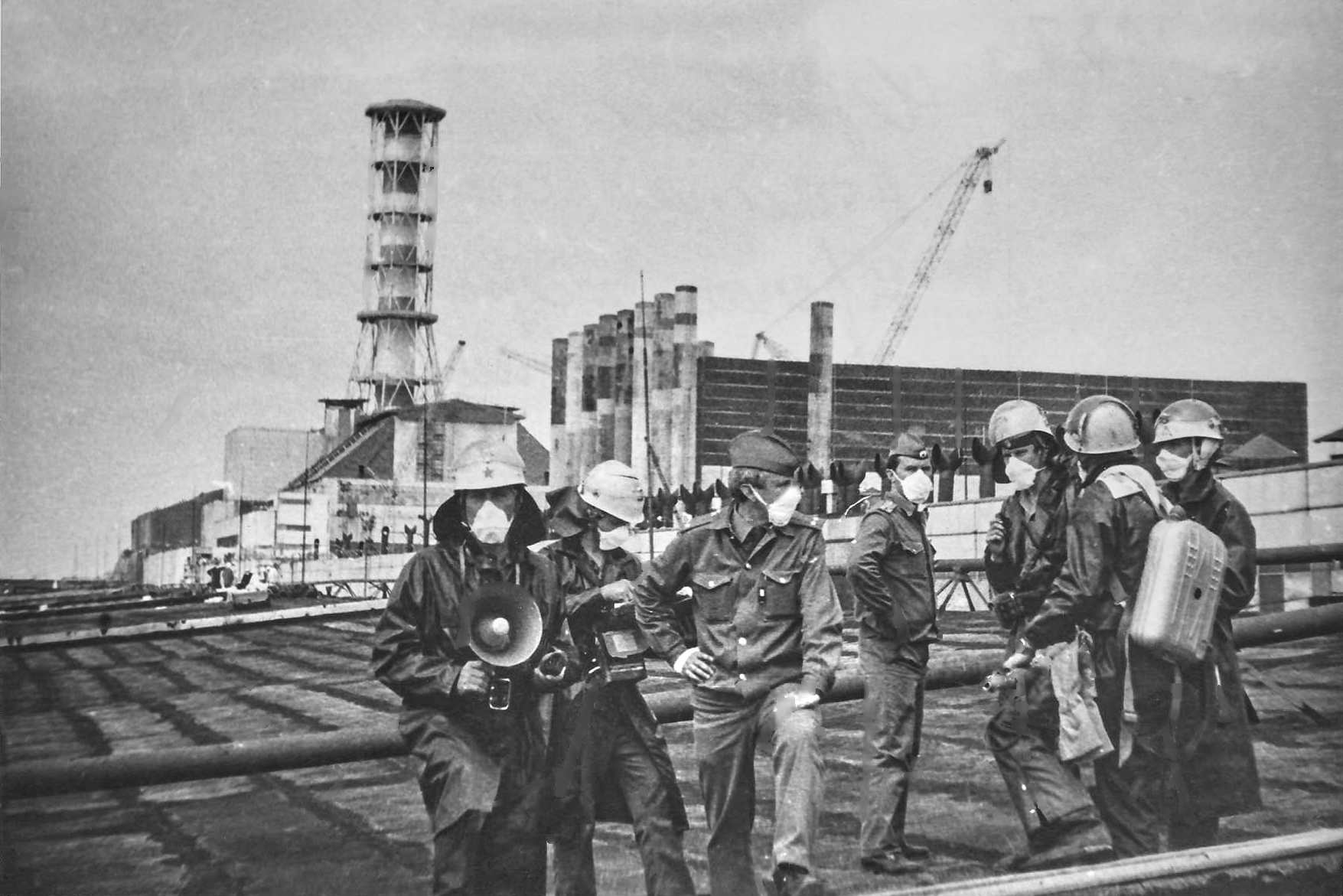
Evacuation, liquidators, decontamination work
The evacuation and resettlement of residents constituted a fundamental measure for the radiation protection of the population. Initially, a decision was taken to evacuate the population from areas where the exposure dose rate exceeded 25 mR/h (250 μSv/h).
This area was within a radius of approximately 10 km from the Chernobyl Nuclear Power Plant. In the initial phase of the accident, up to 7 May 1986, 11,358 people were evacuated from 51 rural settlements in the Bragin, Khoyniki and Narovlya districts. Between 2 and 9 June 1986, a further 6,017 people were resettled from 28 settlements, and by the end of August, 7,327 people had been resettled from 29 villages. Thus, over the course of the year, 24,700 citizens were evacuated from 107 settlements.
A total of 137,700 people were resettled from 471 settlements (295 in the Gomel Region, 174 in the Mogilev Region and 2 in the Brest Region), 75% of whom were residents of the Gomel Region. Alongside the evacuation and organised resettlement, around 200,000 people left the areas of radioactive contamination of their own accord. Evacuated and resettled citizens were provided with accommodation, compensation payments, benefits and concessions.
In the immediate aftermath of the accident, decontamination was carried out as a protective measure alongside the evacuation of the population, i.e. the removal of radionuclides from contaminated areas of institutions and facilities, including the removal of a layer of contaminated soil up to 20 cm thick and its disposal at decontamination waste burial sites, backfilling contaminated areas with clean soil, dust suppression, asphalting of roads and streets, and the replacement of roofs, fences, etc.
In addition to decontamination, the burial of buildings and equipment that cannot be decontaminated is carried out. To carry out decontamination work in areas affected by radioactive contamination as a result of the Chernobyl nuclear power plant disaster, and to implement measures aimed at improving sanitary conditions and reducing radiation hazards, the specialised enterprises ‘Polessye’ (Gomel Region) and ‘Radon’ (Mogilev Region) were established in 1991.
.jpg)
.jpg)
.jpg)
.jpg)
.jpg)
Revival. Socio-economic development of the affected regions
Belarus is currently at the next stage in addressing the Chernobyl legacy – the transition has been made from the rehabilitation of the affected territories to their active revival and accelerated socio-economic development, whilst ensuring that the necessary radiation protection measures are maintained.
State programme initiatives in the affected areas are aimed at creating living conditions that minimise the impact of the negative consequences of radioactive contamination, whilst also serving to protect the population and having a positive impact on the socio-economic development of these territories.
The population of the affected territories is supplied with natural gas. ‘Blue fuel’ has reached all settlements and individual residential homes within the contaminated zone. In the last five-year period alone, hundreds of kilometres of gas pipelines have been laid, and around 5,000 residential homes (flats) have been connected to the gas supply.
At the same time, issues relating to social guarantees and environmental well-being are being addressed comprehensively, based on achieving dynamic and sustainable development in the Chernobyl regions.
This is evidenced by the adoption of the Development Programme for the Pripyat Polesie Regions for 2025–2030.
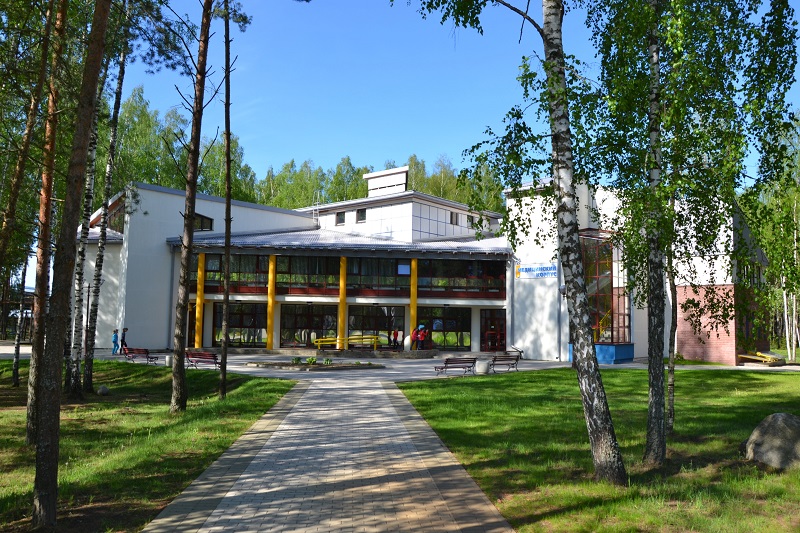
April 26th is a memorable date in Belarus – Chernobyl Tragedy Day. On this day, requiem rallies are held across the country. Everyone remembers the Chernobyl heroes, those who, without sparing their lives or health, stopped the radiation disaster and prevented a great disaster. A new word has entered the Belarusian lexicon: “displaced persons.” They lost the most important thing – their home, their familiar surroundings.
Belarus remembers the heroes who directly participated in extinguishing the fire at the Chernobyl Nuclear Power Plant. Streets in Minsk are named in their honor, such as Vasily Vodolazhsky Street, who, despite being the leader of a joint operational helicopter group, personally flew 120 sorties, dropping approximately 300 tons of blocking materials into the reactor. The memory of the Chernobyl disaster is reflected in creativity, cultural works, and art.
Forty years have passed since the Chernobyl disaster. Events aimed at preserving the memory and cultural heritage of Chernobyl are necessary as a tribute to the courage and heroism of those who perished, and as a warning to future generations. The memory of the consequences of the Chernobyl nuclear power plant accident must be preserved forever as an invaluable lesson and a warning to future generations. It is important that the Chernobyl tragedy be remembered not only by the citizens of the countries that bore the brunt of the disaster, but also by the entire international community.
.jpg)
.jpg)
.jpg)


